
It’s applicable to all kinds of equipment with steady and continuous working equipment or non-steady equipment, such as cooling water pumps, pure water pumps, vacuum pumps, exhaust fans, or handling machinery, mechanical arm, conveyor belts etc., in factories.
The Aurora smart vibration sensors contain vibration accelerometers, high-speed computing units, and various data transmission modules, which can execute edge-computing on high-frequency vibration signals, and only upload the vibration energy characteristics and judgment results from each component they calculated. You don't need to invest huge costs in high-efficiency spectrum analysis equipment, training of personnel spectrum interpretation, communication infrastructure deployment, and huge data storage equipment. It is the most suitable for extensive deployment of machine health monitoring framework.
The smart vibration sensors of Aurora series can execute time-domain analysis, FFT spectrum analysis and conversion of vibration signals. Then calculate the overall vibration energy performance, and the vibration energy feature of various parts damage modes. You can customize the acceptable amount of energy for each damage mode. When the energy feature of a damage mode exceeds the set upper limit, Aurora will send a warning automatically. When the working speed of the equipment changes, the smart vibration sensors of Aurora series will automatically search for the frequency and correspond to the order of component vibration in time. Then recalculate various energy feature to avoid the error of judgment. The analysis results are uploaded to the cloud or SCADA system through the MQTT protocol. You can know the running condition of the equipment remotely and pre-schedule the maintenance of the equipment.
The smart vibration sensors of Aurora series have built-in failure models of several rotary machinery, and it can make benefit for monitoring and diagnosis on the first day of system launch. After the system is online, you can use DynaView vibration and sound signal analyzer or other tools to collect signals, and new models. Then download the new models to the smart vibration sensors through Aurora data and device management software to improve the robustness of the Aurora monitoring system.
Scenario
When you have the following diagnosis requirements, we suggest you adopt the Aurora smart vibration sensors:
- Wanting to know the health status of the field equipment and whether there are assembly or parts damage problems in real time.
- Wanting to estimate the appropriate repair time for field equipment.
- There are numerous machines and equipment on site, but the budget that can be invested in the monitoring system is limited.
Model
The smart vibration sensors of the Aurora series come in different Level grades, combined with vibration accelerometers, high-speed computing units and data transmission modules to build various models, so that they can adapt to different deployment requirements on site.
The models of each Level are as follows:
Level 1: Manual analysis and diagnosis
- 213MM4-R0 Triaxial, medium-to-high bandwidth, RS485 smart vibration and temperature sensor (raw signal output)
- 213MM4-R1 Triaxial, medium-to-high bandwidth, RS485 smart vibration and temperature sensor (raw signal output; sensor ID input required)
- 313MM4-R0 Triaxial, medium-to-high bandwidth, RS485 smart vibration and temperature sensor (raw signal output)
- 213ML5-R0 Triaxial, low bandwidth, RS485 wired smart vibration sensor (outputs 500 samples per second, commonly used for basic monitoring of low-frequency equipment)
- 313ML5-R0 Triaxial, low bandwidth, RS485 wired smart vibration sensor (outputs 500 samples per second, commonly used for basic monitoring of low-frequency equipment)
- 413ML6-R0 Triaxial, low bandwidth, RS485 wired smart vibration sensor (outputs 500 samples per second, commonly used for basic monitoring of low-frequency equipment)
- 413ML6-U0-10816 Triaxial, low bandwidth, USB-socket wired smart vibration sensor (outputs 500 samples per second, commonly used for basic monitoring of low-frequency equipment)
Level 2: Online condition alarm
- 213MM3-R0 Triaxial, medium-to-high bandwidth, RS485 smart vibration and temperature sensor (built-in ISO-10816 or ISO-20816 criteria)
- 313MM3-R0 Triaxial, medium-to-high bandwidth, RS485 smart vibration and temperature sensor (built-in ISO-10816 or ISO-20816 criteria)
Level 3: Online automatic analysis, diagnosis and alarm
- 213MM1-B1 Triaxial, medium-to-high bandwidth, Bluetooth smart vibration sensor
- 213MM2-R1 Triaxial, medium-to-high bandwidth, RS485 smart vibration and temperature sensor (built-in ISO-10816 or ISO-20816 criteria and damage vibration energy calculation model)
- 313MM2-R1 Triaxial, medium-to-high bandwidth, RS485 smart vibration and temperature sensor (built-in ISO-10816 or ISO-20816 criteria and damage vibration energy calculation model)
- 413MM2-R1 Triaxial, medium-to-high bandwidth, RS485 smart vibration and temperature sensor (built-in ISO-10816 criteria and damage vibration energy calculation model)
- 413MM2-U1 Triaxial, medium-to-high bandwidth, USB-socket smart vibration and temperature sensor (built-in ISO-10816 criteria and damage vibration energy calculation model)
Case Study
- Adopt the smart vibration sensors of Aurora series to monitor health condition of the reducer of the panel handling equipment.
- Adopt the smart vibration sensors of Aurora series to monitor health condition of the panel handling mechanical arm, and integrate with the panel factory FDC system for data uploading.
- Adopt the Aurora series to monitor health condition of roll bearings in paper formation factories.
Contact us
If you don’t know whether your application and usage scenarios are applicable to the smart vibration sensors of Aurora series, feel free to contact us.
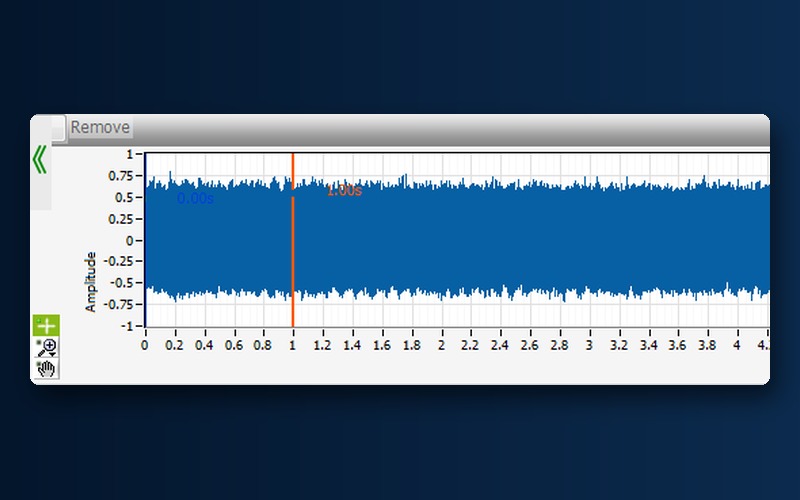
Level 1 Manual Analysis and Diagnosis Sensors
Outputs raw vibration signals for manual analysis and diagnosis.
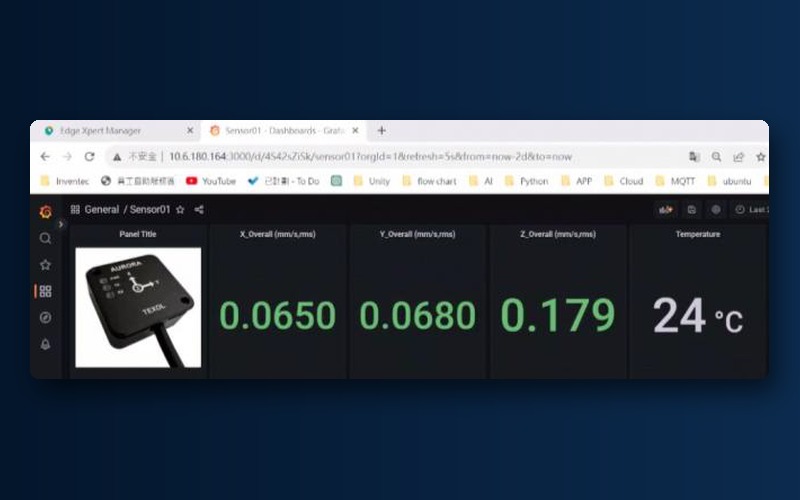
Level 2 Online Condition Alarm Sensors
Built-in criteria for real-time online alarms.
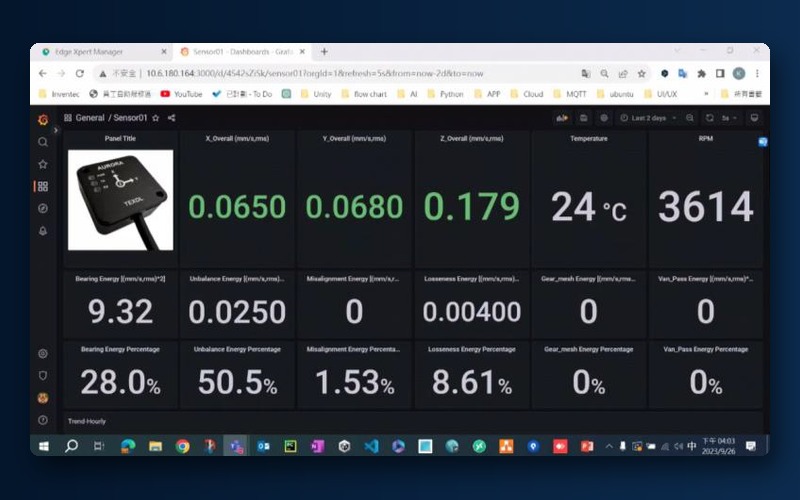
Level 3 Online Automatic Analysis, Diagnosis and Alarm Sensors
Built-in criteria and damage models for online automatic diagnosis and alarms.